
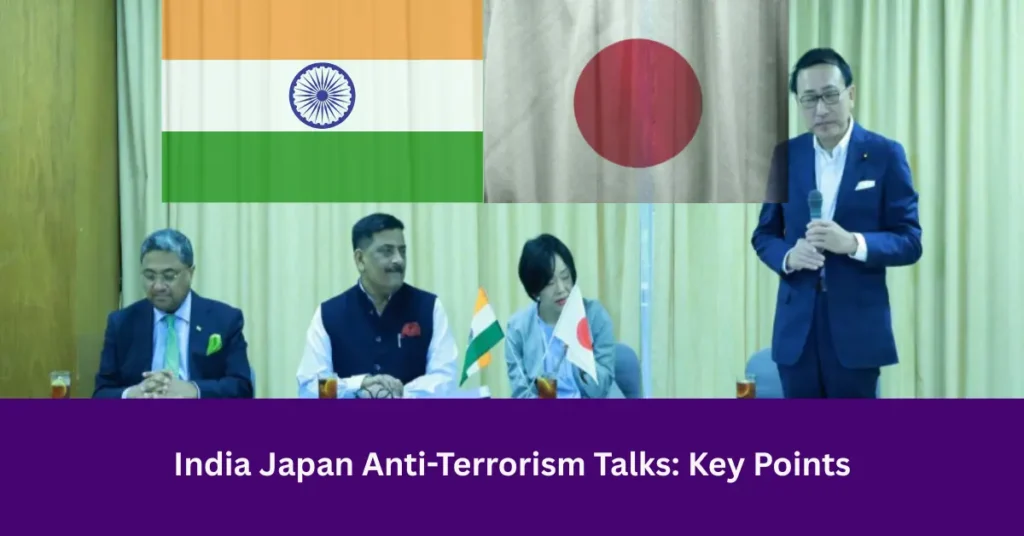
India Japan anti-terrorism talks 2025: India and Japan held anti-terrorism talks to strengthen security ties, tackle global terror threats, and boost Indo-Pacific cooperation.
🔹 Why It Matters
India and Japan—two major democratic powers in the Indo-Pacific—are deepening their strategic partnership with renewed focus on anti-terrorism cooperation. These talks are part of a long-standing bilateral dialogue aimed at combating regional and global terrorism.
🔹 India Japan Anti-Terrorism Talks: Strategic Purpose and Importance
The India Japan anti-terrorism talks are a crucial pillar of the growing strategic partnership between the two Indo-Pacific democracies. With terrorism evolving beyond borders—both physically and digitally—India and Japan aim to synchronize their counterterrorism frameworks. These dialogues also align with broader regional efforts like the Quad, reinforcing a collective security strategy against shared threats.
🔹 When and Where Were the Talks Held?
The latest round of India Japan anti-terrorism talks took place on May 16, 2025, in New Delhi. Senior officials from both nations participated, representing their respective ministries of foreign affairs and national security.
🔹 Who Participated?
- From India: Officials from the Ministry of External Affairs (MEA), Ministry of Home Affairs, and intelligence agencies.
- From Japan: Delegates from the Ministry of Foreign Affairs and National Police Agency, with security attachés from the Japanese embassy.
Both sides emphasized a whole-of-government approach to countering terrorism, financing of terror, and cyber threats.
🔹 Key Points Discussed
- Exchange of Intelligence:
Enhanced real-time information sharing to monitor cross-border terrorist threats and movements. - Tackling Terror Financing:
Emphasis on Financial Action Task Force (FATF) standards and disrupting funding channels for extremist groups. - Cybersecurity Cooperation:
Addressing rising cyber threats linked to terror groups, including online radicalization. - Indo-Pacific Security:
Ensuring a free, open, and rules-based Indo-Pacific, especially amid rising geopolitical tensions. - Capacity Building:
Joint training, counterterror drills, and exchange programs between Indian and Japanese security forces. - Global Collaboration:
Reaffirmed commitment to working together at UN platforms and other global forums to push for comprehensive counter-terrorism frameworks.
🔹 India Japan Anti-Terrorism Talks: Key Areas of Cooperation
At the heart of the India Japan anti-terrorism talks are several focused areas of cooperation:
- Intelligence Sharing: Real-time tracking of terrorist networks.
- Terror Financing: Joint action based on FATF compliance.
- Cyber Terrorism: Addressing online radicalization and infrastructure sabotage.
- Security Drills: Joint training and simulation exercises.
- Legal Frameworks: Coordinated action in multilateral forums like the UN.
Both countries reiterated the need for a rules-based international order, especially in the Indo-Pacific region.
🔹 Strategic Context
India and Japan are both victims of terrorism in the past and have mutual interests in curbing its spread. With growing security cooperation through the Quad alliance (India, Japan, US, Australia), these bilateral talks further bolster trust and readiness.
“Terrorism remains a major threat to international peace. India and Japan stand united against it,” said a senior Indian official during the briefing.
🔹 What’s Next?
Both sides agreed to continue regular consultations, explore joint technology development in counterterrorism tools, and conduct joint workshops later this year.
🔹 India Japan Anti-Terrorism Talks: Outcomes and Future Plans
The India Japan anti-terrorism talks concluded with a strong joint commitment to deepen collaboration. Officials agreed on:
- Conducting joint counterterrorism workshops later in 2025.
- Establishing a 24×7 communication channel for threat alerts.
- Strengthening cyber defense collaborations.
- Aligning more closely in upcoming global summits on security.
These outcomes highlight the growing trust and coordination between New Delhi and Tokyo in tackling terrorism together.